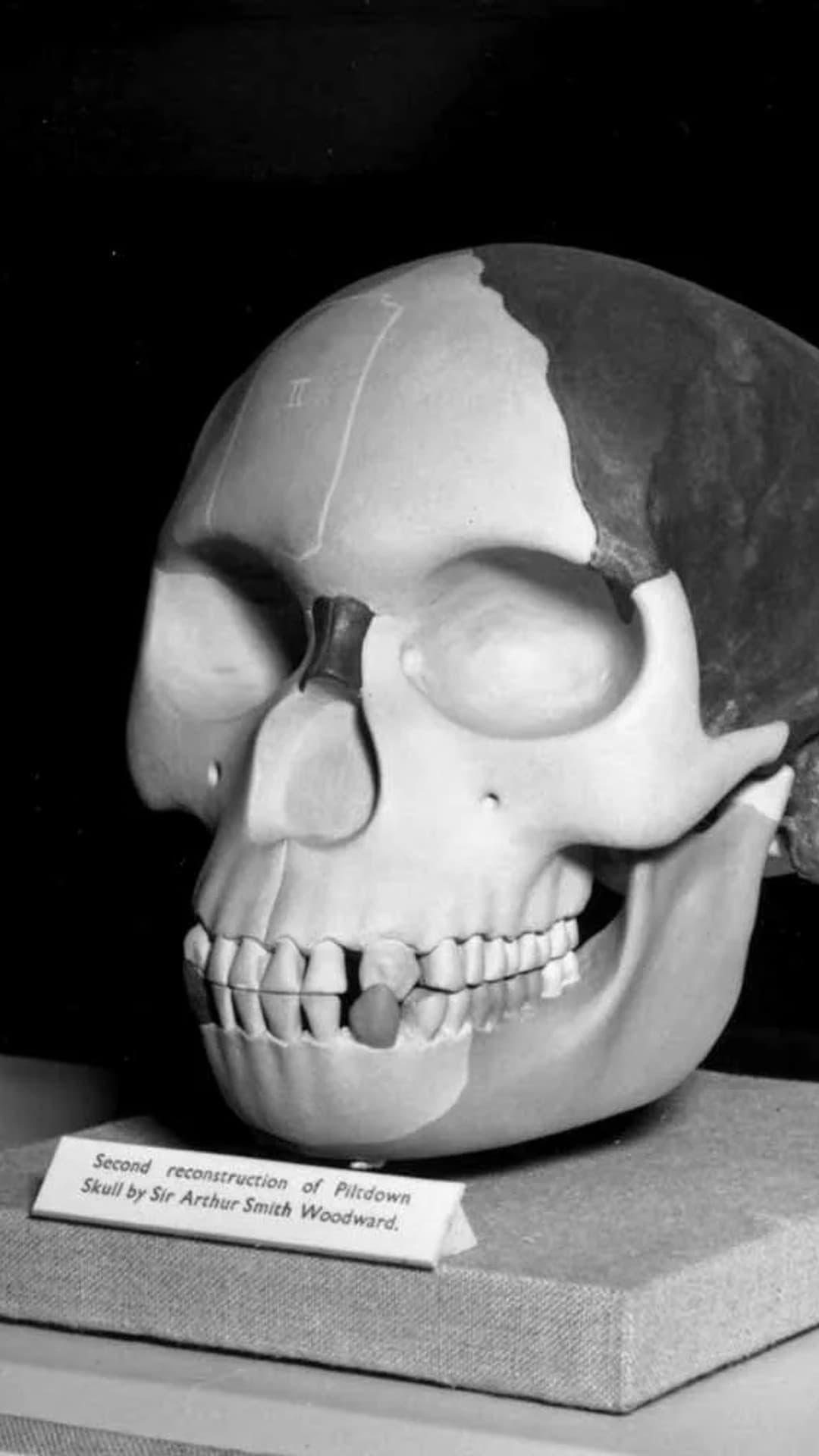
The Piltdown Man fossil hoax that fooled scientists for decades
In 1912, Charles Dawson claimed he had found an ancient human skull that could be the missing link to human evolution. It took decades to expose the deliberate forgery.
In 1912, Charles Dawson made an announcement that would shake the scientific world. He claimed he had found an ancient human skull that could represent a crucial discovery in understanding our origins.
Scientists at the time believed this specimen, which became known as Piltdown Man, could be the missing link to human evolution. The find seemed to fill a critical gap in the fossil record, offering evidence of an early human ancestor.
Decades of deception
For decades, Piltdown Man fooled scientists around the world. The specimen was studied, debated, and cited in research as genuine evidence of human evolutionary history. It shaped theories and influenced the direction of paleoanthropological research.
The truth revealed
Eventually, scientific testing exposed the skull as a deliberate forgery. The careful examination revealed that Piltdown Man was not an ancient fossil at all, but a fabricated hoax designed to deceive the scientific community.
A lasting impact
Though Piltdown Man was fake, it changed the history of human evolution. The hoax demonstrated the importance of rigorous scientific verification and skepticism. It also served as a cautionary tale about the dangers of confirmation bias and the need for independent testing of extraordinary claims in science.